Why I changed my mind about who I ride for
I wanted to ride every day in 2027 for a queer kid who died by suicide. Their name, their picture, their story. Then I read the research. Told that way, those stories can raise the risk for the kids reading them. So I changed my mind. Here’s what I learned, and what I’m doing instead.
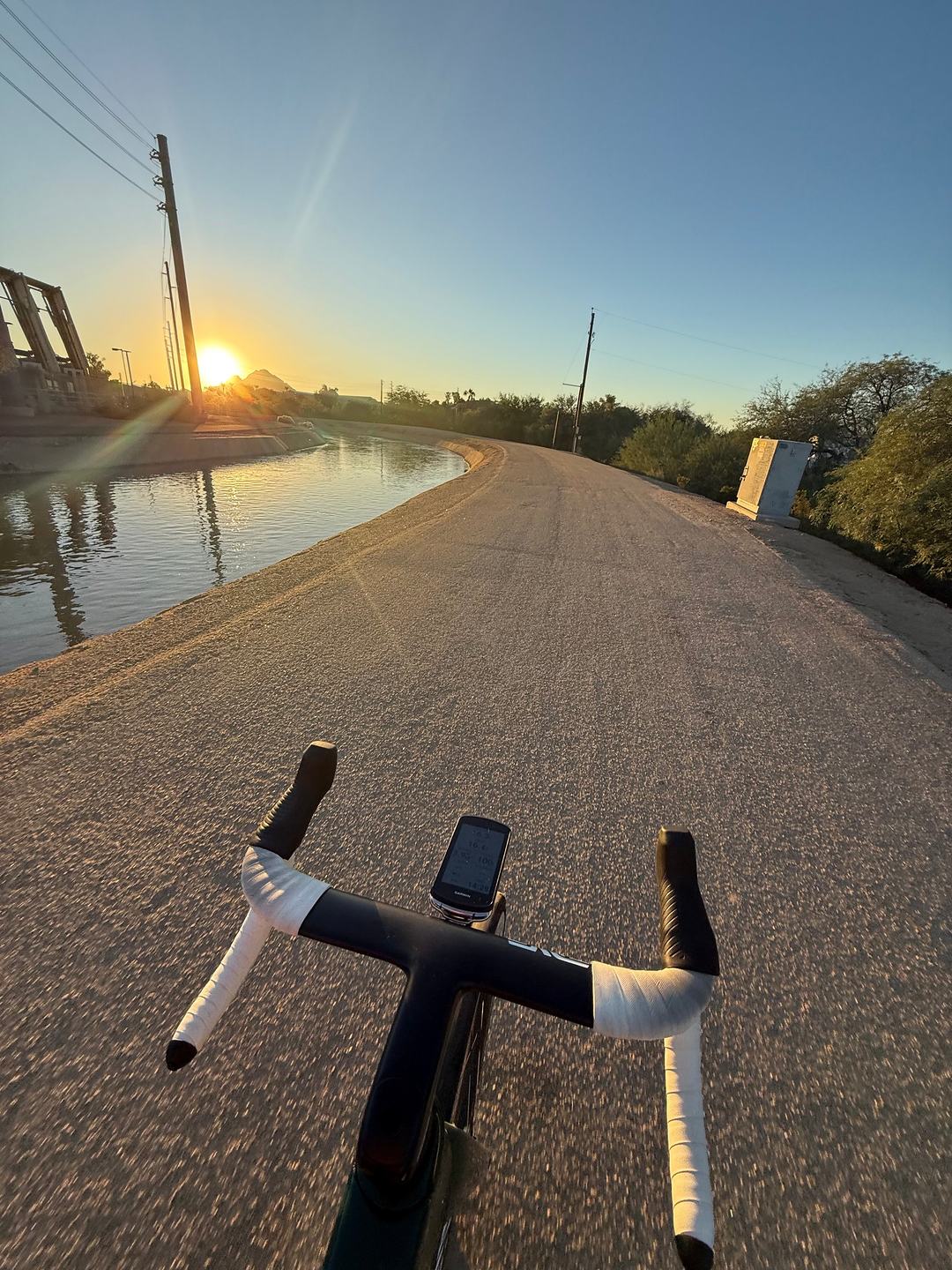
The idea
Every ride, I say who I’m riding for. Some days it’s a fundraiser. Some days it’s just me.
I wanted some of those days to belong to real kids. Not famous ones. Some kid in rural America, and a mom or a family keeping their memory alive by telling their story.
A lot of rides. A lot of names. Every day I ride, I’d take a minute, say their name and talk about why they mattered. I wanted as many people as possible to get one thing: queer kids need love, and they need to see themselves, to be happy.
Before I asked a single family, I wanted to look into it. I’m glad I did.
What the research says about sharing these stories
Here’s what I found. It’s strong on the big points and still argued over on some details. All 19 sources are at the end.
Researchers call it the Werther effect, after an old novel. When a suicide gets a lot of attention, more suicides can follow.
It shows up in the numbers. After news coverage of a celebrity’s suicide, suicides went up about 13% over the next few weeks, across 14 studies1.
Young people are among the most at risk of this. So is anyone who sees themselves in the person who died2. One study looked at 48 clusters of teen suicides. The towns where a cluster started had more news stories about suicide right after the first death, more often on the front page, with more detail about the person3.
In 2017, after 13 Reasons Why came out, the suicide rate for kids 10 to 17 went up 29% the next month4. Researchers still argue about how much of that was the show5.
Then the part that stopped me. Back in 2011, the then-interim head of the Trevor Project warned that all the attention on specific LGBT kids who died by suicide might be making things worse6.
This year the Trevor Project, the American Foundation for Suicide Prevention, the Movement Advancement Project and the Johnson Family Foundation put out updated guidance on talking about suicide and queer people7. Some of what it says:
- Don’t pin a death on one cause, even discrimination. It can make suicide look normal7.
- Don’t announce deaths on social media. Don’t share personal details7.
- Don’t make the person who died into a kind of celebrity7.
- Don’t tally up deaths in a way that makes kids see themselves as part of the story7.
The news-reporting guidelines say the same: no guessing at a single cause, no personal details, always say where to get help8. And the World Health Organization says a photo of someone who died should be used with great caution, only with the family’s clear OK, and never up front2.
What I had planned
I went back through my idea with that list in hand. A real kid. Their photo. Why they died, the way their family saw it. A new one every day, for months. Posted where queer kids would see it.
That’s almost every warning on the list. And the kids I most want to reach are the ones who’d be reading.
That’s really hard. I meant it as love. But meaning well isn’t the test. What it does to the kid reading it is the test.
What helps instead
The same research has a flip side. Stories about people who got through a dark time, and what helped them, go the other way.
- In Austria, newspaper stories about people who got through a crisis were followed by fewer suicides9.
- Across eight trials, people who were already struggling and read or watched a recovery story had a little less suicidal thinking afterward than people who didn’t10. Small. But real.
- The World Health Organization’s newest guidance for the media puts stories of survival and recovery up front11.
- In 2017 a Logic song named after the old crisis line number got huge. In the weeks after its biggest moments, the line got almost 10,000 more calls than expected, and there were about 245 fewer suicides than expected12. The researchers say that can’t prove the song did it.
The guidance for queer people says it plainly. Show resilience. Show family acceptance. Show people who reached out for help and got through7.
What helps queer kids live
One more thing I had backwards. Being queer isn’t what puts kids at risk. How they get treated is13. And most queer people who get bullied or rejected don’t become suicidal7.
Suicide almost never has one cause. And most people who have thought about it get through it, with support and treatment that work8.
The things that help aren’t complicated.
- One accepting adult. Queer kids with at least one had 40% lower odds of a suicide attempt in the past year14.
- Their name. For trans kids, every extra place they could use their chosen name (home, school, work, friends) went with less depression, 29% lower odds of suicidal thinking and 56% lower odds of suicidal behavior15.
- Their pronouns. Trans and nonbinary kids whose whole household respected their pronouns attempted suicide at less than half the rate of kids where nobody did16.
- A place to belong. In the Trevor Project’s newest survey, kids with a supportive home, school or community event had lower attempt rates. Kids in very accepting communities had about a third the rate of kids in very unaccepting ones16.
- Their family. Family acceptance as a teenager went with more self-esteem, more support and less depression as a young adult17.
These are links, not proof. They come from surveys, not experiments. But they all point the same way.
I’m a bike guy, so I looked at sports too. Queer kids who play sports had nearly 20% lower odds of depression symptoms. That didn’t hold for the trans and nonbinary kids in the same study18. In another study, the benefit of being active seemed to show up mainly for kids who weren’t being bullied19.
So a bike doesn’t fix anything. A ride where a queer kid is safe and welcome might help. That part is on us.
Growing up should be exciting and fun, because you get to be who you are.
That’s the world I was talking about.
What I’m doing now
I’d rather do what’s best to help kids live good lives.
So the rides go to the living. To people who made it, and to whoever helped them get there. If that’s you, tell me what you cycle for. If it’s a hard day right now, call or text 988 first. I don’t check that page around the clock.
And if you’re a queer kid reading this and it’s heavy right now, there are people who want you here. The numbers are right below. They answer any hour.
Sources
- Niederkrotenthaler T. et al., BMJ — Association between suicide reporting in the media and suicide: systematic review and meta-analysis (2020). link
- World Health Organization and International Association for Suicide Prevention — Preventing suicide: a resource for media professionals (2017). link
- Gould M.S. et al., Lancet Psychiatry — Newspaper coverage of suicide and initiation of suicide clusters in teenagers in the USA, 1988–96 (2014). link
- National Institute of Mental Health — Release of “13 Reasons Why” associated with increase in youth suicide rates (2019, on Bridge J.A. et al., Journal of the American Academy of Child & Adolescent Psychiatry). link
- Romer D., PLOS ONE — Reanalysis of the Bridge et al. study of suicide following release of 13 Reasons Why (2020). link
- LGBTQ Nation — Trevor Project director warns media attention of specific LGBTQ youth suicides harmful (2011). link
- Movement Advancement Project, American Foundation for Suicide Prevention, The Trevor Project, Johnson Family Foundation — Talking About Suicide & LGBTQ Populations, 2nd edition, 2026 update (Aug 2026). link
- Reporting on Suicide — Best practices and recommendations for reporting on suicide (n.d.). link
- Niederkrotenthaler T. et al., British Journal of Psychiatry — Role of media reports in completed and prevented suicide: Werther v. Papageno effects (2010). link
- Niederkrotenthaler T. et al., Lancet Public Health — Effects of media stories of hope and recovery on suicidal ideation and help-seeking attitudes and intentions: systematic review and meta-analysis (2022). link
- World Health Organization — Preventing suicide: a resource for media professionals, 2023 update (2023). link
- Niederkrotenthaler T. et al., BMJ — Association of Logic’s hip hop song “1-800-273-8255” with Lifeline calls and suicides in the United States (2021). link
- The Trevor Project — LGBTQ+ resources for supportive adults and allies (updated 2026). link
- The Trevor Project — Accepting adults reduce suicide attempts among LGBTQ youth, research brief (2019). link
- Russell S.T., Pollitt A.M., Li G., Grossman A.H., Journal of Adolescent Health — Chosen name use is linked to reduced depressive symptoms, suicidal ideation, and suicidal behavior among transgender youth (2018). link
- The Trevor Project — 2025 U.S. National Survey on the Mental Health of LGBTQ+ Young People (published May 2026). link
- Ryan C., Russell S.T., Huebner D., Diaz R., Sanchez J., Journal of Child and Adolescent Psychiatric Nursing — Family acceptance in adolescence and the health of LGBT young adults (2010). link
- The Trevor Project — The well-being of LGBTQ youth athletes, research brief (2020). link
- Kirklewski S.J., Watson R.J., Lauckner C., Journal of Sport and Health Science — The moderating effect of physical activity on the relationship between bullying and mental health among sexual and gender minority youth (2023). link